In the transition from internal combustion engines (ICE) to electric vehicles (EVs), the cooling system has evolved from a relatively simple component for preventing overheating into a sophisticated Thermal Management System (TMS). This system is now a mission-critical component that governs the performance, efficiency, and longevity of almost every aspect of the vehicle. Manufacturers like Tesla have pioneered highly integrated architectures, demonstrating that precise temperature control is the hidden heart of an EV's performance.

The Thermal Management System: The Guardian of EV Performance
The Four Key Areas of an EV’s Thermal Management System
Unlike a combustion engine, which simply needs to dissipate excess heat, an EV requires precise, bi-directional thermal control (both heating and cooling) for four key areas:
• The Battery: The most temperature-sensitive component. Lithium-ion batteries must remain within a narrow range to allow fast charging, high efficiency, and long life. Too cold, and charging slows. Too hot, and degradation accelerates.The TMS ensures the battery is heated in winter and cooled during demanding driving or supercharging.
• Electric Motors and Inverters: Even high-efficiency EV motors generate heat under load. Proper cooling prevents thermal throttling and protects internal components.. An effective TMS dissipates this heat to prevent performance loss (known as thermal throttling) and protect the components from long-term damage.
• Cabin Climate Control: Unlike ICE vehicles, EVs don’t get free heat from engines. A modern heat pump system reuses waste heat from the battery and motor, ensuring comfort while preserving driving range. Modern TMS, such as those using heat pumps, are designed to heat the cabin as efficiently as possible, often recovering waste heat from the battery and motors to minimize the impact on range.
Inside Tesla’s Smart Thermal Management System
Tesla’s approach combines one integrated coolant circuit with intelligent valve control, allowing energy to flow exactly where needed.
Here’s how it operates:
Battery Heating Mode: In cold conditions, the system redirects heat from the motor and inverter to warm the battery — ensuring optimal charging and performance.
Cooling Mode: In hot conditions or during rapid charging, the coolant loop redirects excess heat to the front radiator, keeping all systems stable and safe.
When the System Fails: The Gates® ThermalPro™ Range Offers the Solution
Despite their sophistication, these systems are not maintenance-free. Over time and mileage, mechanical components such as electric water pumps, coolant control valves, and hoses can fail, compromising the integrity of the entire system. A failure in the TMS can result in slow charging times, a permanent reduction in range, or, in the worst-case scenario, costly damage to the battery or powertrain.
For the professional workshop, it is essential to have OE-quality replacement parts that restore the functionality and reliability of the original system. Gates, as a leader in fluid management and power transmission solutions, offers a growing range of components for the EV thermal management system through its specialized Gates® ThermalPro™ line.
Gates ThermalPro™ range includes:
- Electric water pumps: Vital components that ensure coolant circulation. Gates offers OE-quality replacements such as pumps 41587E, 41605E, and 41596E, as well as 41603E and 41604E for other Tesla models.
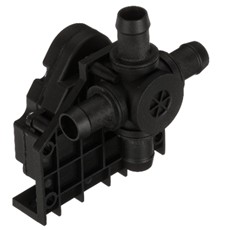
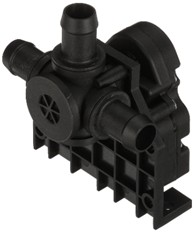
- Electric coolant valves: These valves are the brains of the system, directing coolant where it's needed. Gates provides replacements like the EHV144 and EHV145 valves.
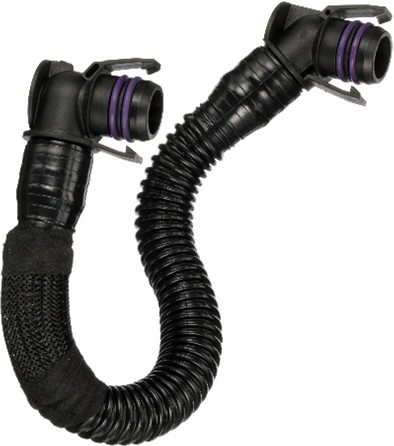
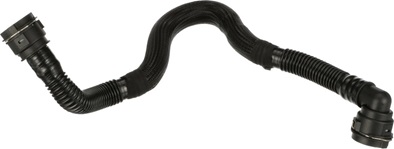
- Thermal management hoses: Tesla vehicles use molded nylon hoses to optimize weight and manufacturing efficiency. Gates offers replacement hoses that match the fit, form, and function of the originals, ensuring a simple, leak-free installation.
Best Practices for Professional EV Thermal Maintenance
When performing any maintenance work on an EV's TMS, there are two crucial considerations to ensure a high-quality, lasting repair:
Use the Correct Coolant: The Danger of Conductivity
An EV's fluid is not a simple antifreeze; it is an engineered fluid whose most critical property is extremely low electrical conductivity. While conventional coolants for combustion engines use ionic additives (salts like silicates and phosphates) that make them highly conductive, EV fluids use non-ionic organic additives to prevent corrosion without conducting electricity.
Using a conventional coolant in an EV is extremely dangerous and introduces risks of catastrophic failure:
• Short Circuits and Fire Risk: In the event of a leak, a conductive fluid can create an electrical bridge between high-voltage components (400V-800V) and the vehicle's chassis, causing short circuits, damage to electronics, and a serious risk of fire.
• Accelerated Galvanic Corrosion: The conductive fluid acts as a perfect electrolyte, drastically accelerating corrosion between the different metals in the system (aluminum, copper), which can lead to leaks in critical components like the battery cooling plates.
Therefore, it is a safety and engineering mandate to strictly adhere to the manufacturer's specifications and completely avoid "universal" fluids or those with an unsuitable specification.
Thoroughly Purge and Clean the System
After any intervention, it is vital to purge all air from the circuit. In complex systems like Tesla's, this process requires the use of diagnostic software to electronically activate the valves and pumps, ensuring that the fluid fills every corner of the system without leaving air pockets that could cause overheating.
Beyond purging, cleaning is fundamental. A thorough cleaning removes any remaining deposits or impurities, and also eliminates remnants of old coolant that may be degraded or mixed.
Conclusion: The Future of Maintenance Is Electric
Thermal management isn’t just a supporting system — it’s the foundation of EV performance and safety.
As electric mobility expands, workshops must adapt their knowledge and equipment. With Gates® ThermalPro™, you’re ready to ensure every EV remains efficient, reliable, and road-ready.
Learn more about electric vehicle innovation at:
visit.gates.com/electricthinking.html
FAQ – Thermal Management in EVs
Q1: Why is thermal management more complex in EVs than in traditional cars?
Because EVs require both heating and cooling to maintain optimal efficiency for batteries and motors, not just heat dissipation.
Q2: How often should workshops check EV thermal components?
At every service interval or when symptoms like reduced charging speed or unusual fan noise appear.
Q3: Can I use any coolant for EVs?
No. Always use manufacturer-approved non-conductive fluids to prevent short circuits and corrosion.
Q4: How can Gates® ThermalPro™ help my workshop?
By offering OE-quality parts that simplify EV maintenance and keep advanced systems working at peak performance.