Learn how to choose the correct belt, install it correctly, avoid common failures, and ensure long‑term reliability for 50–850 cc CVT drivetrains.
Continuously Variable Transmission (CVT) systems are at the core of modern scooter performance. The Gates G‑Force™ PowerLink™ CVT belt range is engineered to efficiently transfer engine power to the rear wheel, even under extreme operating conditions such as heavy urban traffic, high thermal loads, and frequent stop‑and‑go riding.
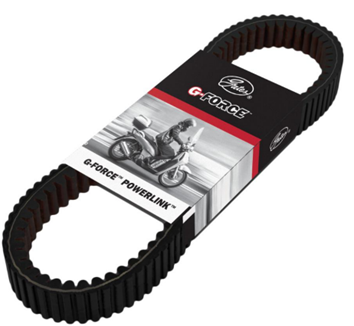
Main Features of Gates PowerLink™ CVT Belts
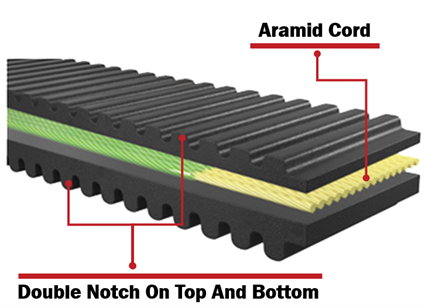
The PowerLink™ range is an advanced engineering component featuring:
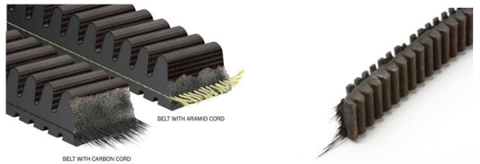
Aramid fiber‑reinforced rubber compound
Ensures exceptional wear resistance and provides
smooth, precise movement within CVT variator pulleys.
Chemically treated tensile cords
Enhanced bonding between rubber and cords guarantees
high shock resistance and extended belt life.
Broad operating temperature range
Reliable performance in both cold starts and extreme heat typical of urban riding conditions.
Strict dimensional control
Gates’ manufacturing accuracy ensures perfect belt geometry, essential for correct CVT operation and reduced vibration.
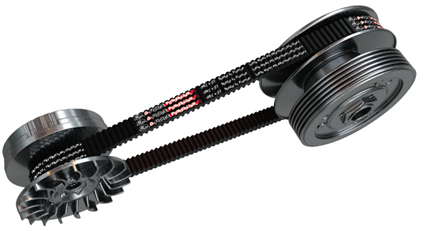
PowerLink™ Belt Series by Engine Displacement:
Depending on the engine displacement, Gates offers three specific constructions:
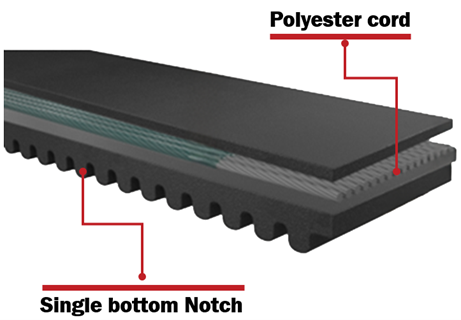
1. PL21 Series for 50-100cc power range.
- Rounded Bottom Cog
- Tensile Polyester Cord, specially tailored to small cylinder engines under 100cc.
- Top width 13-19 (mm
2. PL31 Series for 125-200cc power range.
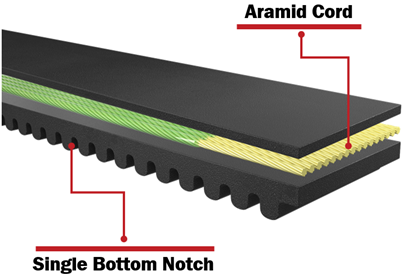
- High tensile Aramid cord which Maximizes acceleration and shock load resistance
- Rounded Bottom Cog
- Top width 15-24,5 (mm)
3. PL41 series for 250-850 cc power range.
- High tensile Aramid cord which Maximizes acceleration and shock load resistance
- EPDM Maximum compression stiffness, longevity and heat resistance
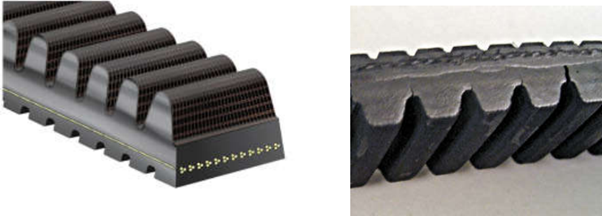
- Trapezoidal Top Cog with Rounded Bottom Cog
- Top width 22,5-32,5 (mm)
Installation and Best Practices: Avoid Premature Failure
Most CVT belt failures are not caused by the belt itself, but by incorrect installation or driveline imbalance. Following best practices is critical to achieving maximum belt life.
To maximize the lifespan of your Gates PowerLink™, follow these rules:
Proper Clutching (System Tuning):
- The variator and clutch must be calibrated according to the vehicle's use.
- Important Clutch Tuning: Seek professional help in most cases due to the special tools required when working on clutches. An incorrectly tuned system will cause excessive belt slippage, generating heat that will glaze the belt in a few kilometers.
Proper Belt Handling
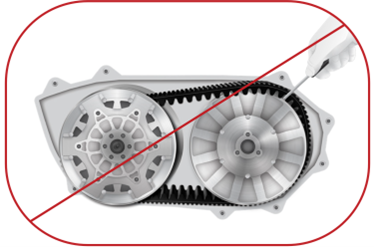
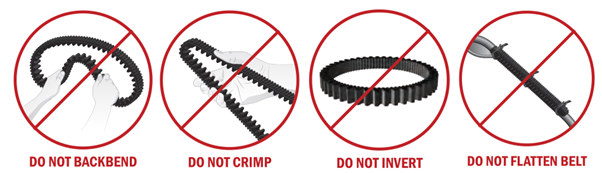
- The internal structure is sensitive. NEVER back-bend the belt, do not crimp it, and never pry with tools during installation. Always store in its original shape.
Proper Belt Break-In:
- Perform a break-in period of about 50 km, avoiding hard acceleration from a stop to allow the belt flanks to seat perfectly into the pulleys.
CVT Belt Failure Modes: Diagnosis and Solutions
Identifying the root cause of the old belt's failure is the best way to protect the new installation:
Possible causes:
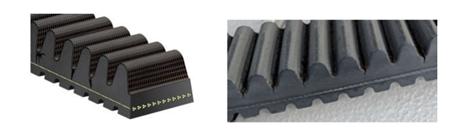
Shock loading from aggressive launches
Damage during installation (prying or back bending)
Recommendation:
Use pulley expansion tools only and verify correct engagement RPM and smooth drivetrain operation.
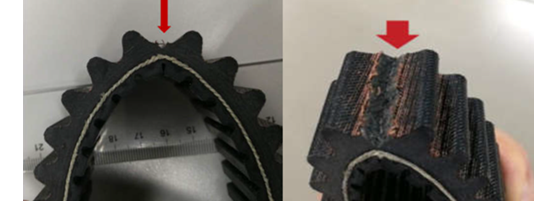
Cracks Forming Due to Flex Fatigue (Worn Belt)
Replace the belt immediately and perform the proper break-in procedure. NEVER turn a CVT belt inside out or crimp it during handling.
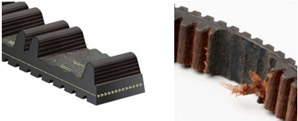
Chunk-out (Sheared Cogs)
Improper installation (crimped belt) or thermal fatigue from high mileage/extreme heat, evidenced by cracks between cogs.
Replace the belt and perform proper break-in. Check drive components to confirm a clear belt travel path.
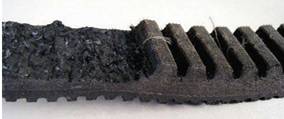
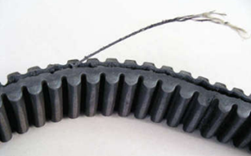
Edge Cord Pullout (Fraying)
Clutch misalignment or incorrect belt-pulley angles preventing the belt from riding fully on the sidewalls, resulting in extreme friction.
Inspect primary and secondary clutches for defects and ensure proper alignment before installing the new belt.
Hour-glassing / Spin Burns
The belt was stationary while the drive clutch was spinning at full speed (vehicle stuck, or opening the throttle while braking).
Verify the correct belt-to-sheave clearance and ensure the secondary clutch is stationary at idle.

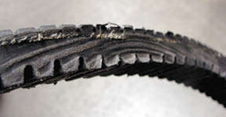
Glazing (Melted/Shiny Appearance)
Intense heat from excessive slippage due to dirty pulleys (oil, dirt), worn rollers, or weakened contrast springs.
Always clean pulley sheaves with a non-residue cleaner and inspect rollers and bushings for wear.
Preventive Replacement and Professional Solution
Gates recommends a preventive replacement interval between 18,000 km and 30,000 km, always depending on the application and the OE maintenance plan.
Clutch System Inspection and Maintenance
Installing a new belt is only part of the job. To ensure reliability, the following checks are mandatory:
- Inspection and Alignment: Inspect primary (variator) and secondary (clutch) units for defects and ensure proper alignment. Prep pulley sheaves by cleaning them thoroughly.
- Component Cleaning: Verify that sheaves are free of contaminants like grease or old belt residue.
- Wear of Moving Parts: Examine variator rollers, ramps, contrast springs, and bushings. Replace any part that does not allow for fluid movement.
- Operational Awareness: Educate the owner on the risks of excessive wide-open throttle during long stops, which accelerates thermal wear.